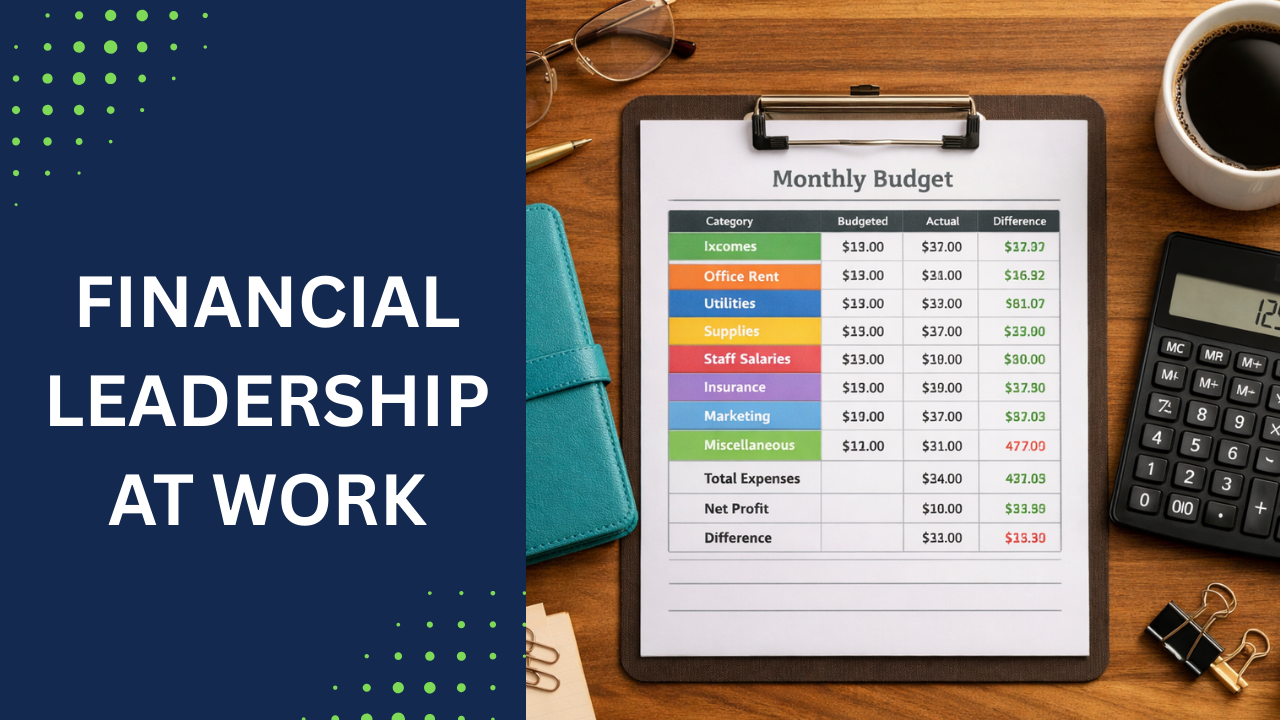
Budgeting for Your Bottom Line: Strategic Planning That Actually Works
Strong financial planning starts with understanding where your money is going and why. Learn how to build a functional budget, adjust when reality changes, and create long-term financial stability for your practice.
A 2025 medical economics report projects that practices with robust budget planning improve cash flow by 18% — a number that translates directly to financial stability, team investment, and growth. Yet most private practice owners treat budgeting as a once-a-year exercise rather than a living management tool. As Dave Ramsey puts it: a budget is telling your money where to go instead of wondering where it went.
Forecasting vs. Projections: Know the Difference
These two tools serve very different purposes. Forecasting uses historical data to predict likely near-term outcomes — it answers 'where are we headed based on what has already happened?' Projections are scenario-based estimates used for strategic planning — they answer 'what could happen if we make specific changes?' Both are essential. Brandon uses forecasting for cash flow management (how long until a new hire covers their cost) and projections for investor conversations and expansion planning.
Building a Budget That Actually Functions
Start by analyzing every revenue stream by source — not just by payer, but by service type, modality, and patient category. Then categorize all expenses into fixed (rent, contracted salaries), variable (supplies, marketing), and capital (equipment upgrades). Tools like QuickBooks and Athenahealth can automate the tracking. Brandon's recommendation: zero-based budgeting every cycle — start from scratch rather than copying last year's numbers, and tie every expense to a specific practice goal.
Recalibrating When Reality Diverges From the Plan
Brandon's three-step process when budgets drift:
Conduct a variance analysis — compare actual to budgeted figures quarterly and identify root causes. Was it a revenue shortfall from insurance changes? An unbudgeted hire?
Reassess your revenue forecast and adjust cost structures — don't just cut; reallocate strategically.
Engage stakeholders in a rolling budget approach, updating quarterly based on new data rather than committing to a static annual number. Six months of operating cash in reserve is Brandon's baseline. Anything below 90 days is a risk. And remember: your CPA and a financial planning partner should be collaborating on both your practice and personal financial trajectory.
By clicking “Accept all cookies,” you consent to storing cookies on your device to improve navigation, analyze site usage, and support our marketing efforts, as detailed in our Privacy Policy.